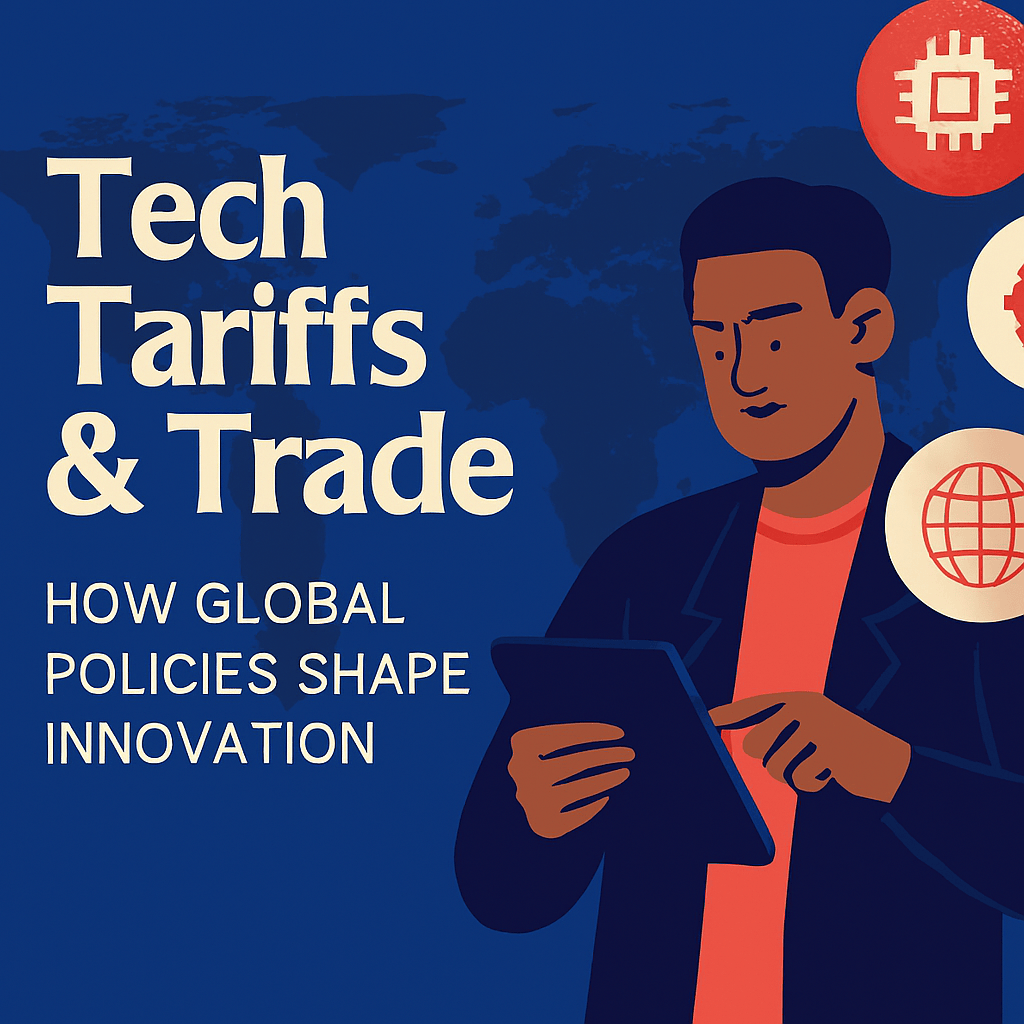
🌐 The New Wave of Tech Tariffs
In a bold move that’s reshaping the global technology landscape, the United States recently imposed steep tariffs on imports from 14 countries, citing national security and economic competitiveness. These trade restrictions target critical sectors, including semiconductors, AI hardware, and digital infrastructure components.
Interestingly, India was exempted from this sweeping policy—a strategic decision that positions it as a potential tech hub in the evolving global order.
🔄 Ripple Effects on Global Supply Chains
The new tariff regime is already causing disruptions across Asian tech ecosystems:
– Japan and South Korea, key players in chip manufacturing, face increased costs and rerouted supply chains.
– Indonesia and Vietnam, rising stars in hardware assembly, are reassessing their export strategies.
– European tech firms are bracing for delays in component sourcing and cross-border innovation projects.
These shifts are not just economic—they’re deeply strategic, influencing how technology companies plan, invest, and scale.
– Attract foreign investment in semiconductor fabrication, AI development, and cloud infrastructure.
– Strengthen its Make in India initiative and expand digital exports.
– Serve as a neutral ground for global tech collaborations amid rising geopolitical tensions.
Government-backed programs like Digital India, PLI schemes, and Startup India are already aligning with this momentum, making India a preferred destination for tech innovation.
🧭 What Businesses Should Watch
For startups, SMEs, and multinational tech firms, here are key takeaways:
– Monitor tariff updates and trade agreements via platforms like WTO Tracker and TechPolicy Digest.
– Diversify supplier networks to mitigate risks from policy shifts.
– Explore India-based partnerships for R&D, manufacturing, and market expansion.
– Invest in regulatory intelligence tools to stay ahead of compliance and opportunity.
📬 Final Thought
As both technology and trade become increasingly intertwined, understanding the policy landscape is no longer optional; rather, it’s a strategic imperative. India’s emerging role offers both opportunity and responsibility in shaping the next wave of global innovation.


Leave a Reply