Blog

  • 2026 SOCIAL MEDIA MARKETING TRENDS

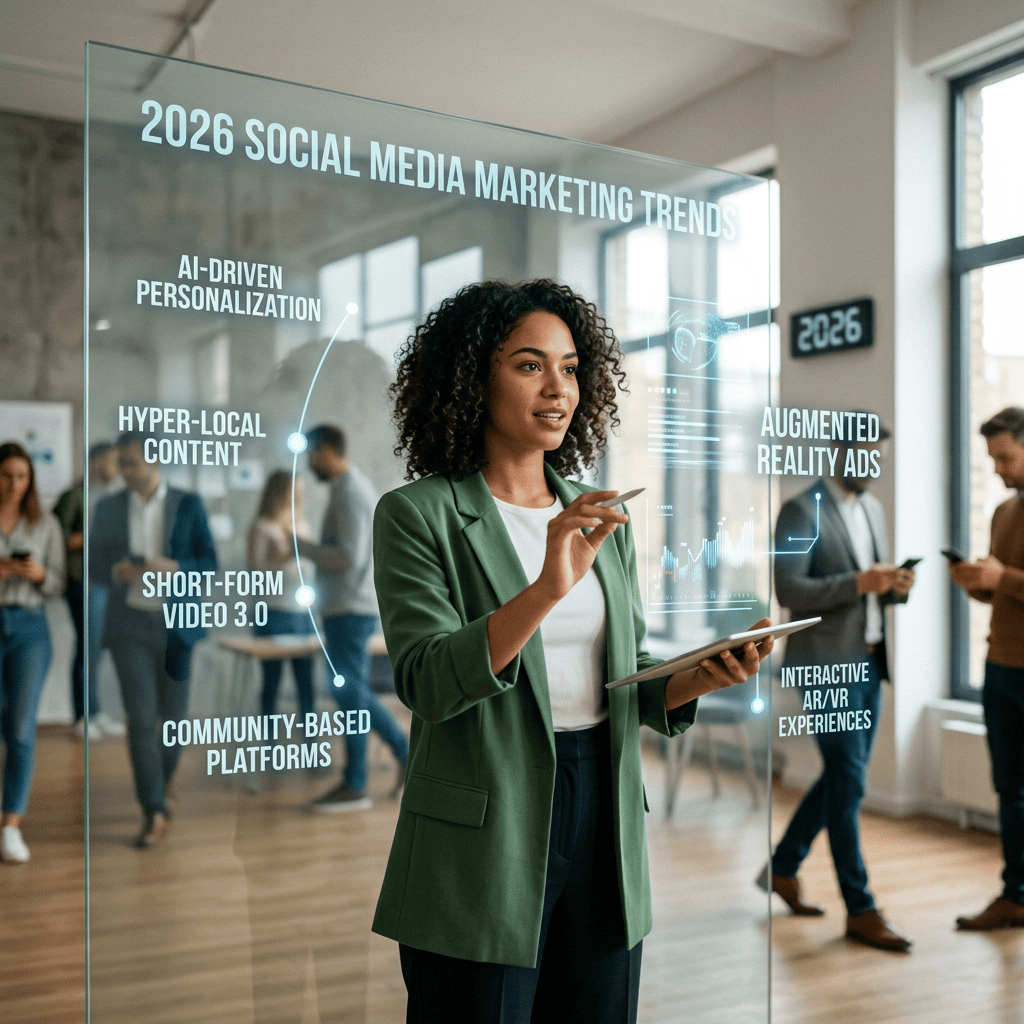
    2026 SOCIAL MEDIA MARKETING TRENDS

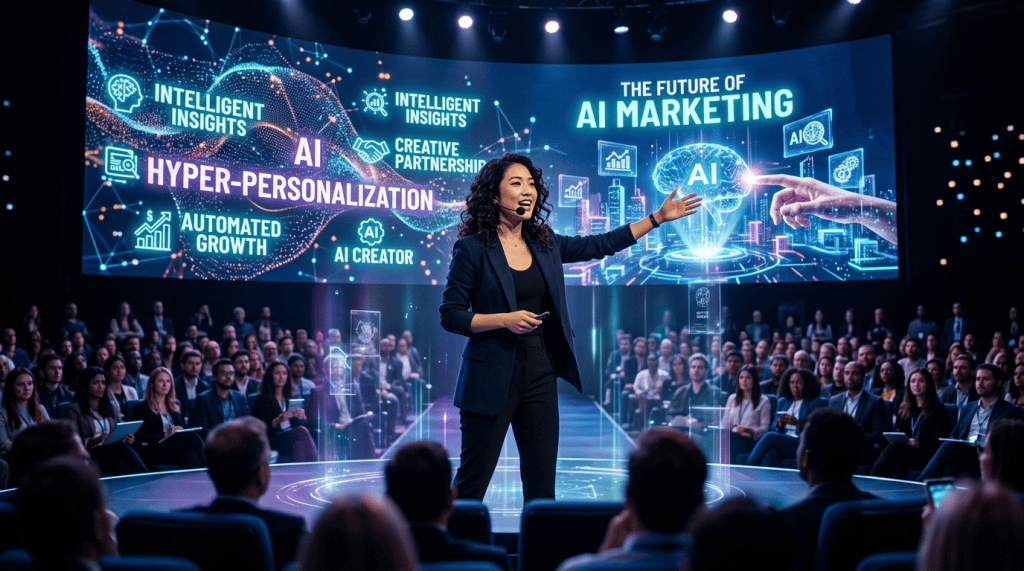
    This year is all about AI content creation tools and if you’ve felt like your feed, your engagement, and your entire content calendar got rewritten overnight, you’re not imagining it. A recent trend breakdown making the rounds on social platforms put it plainly, marketing is changing and the brands still leaning on 2023 playbooks are quietly losing ground.

    Below, I’ve pulled together the most useful social media marketing trends 2026 insights from that discussion, broken into practical, no-fluff takeaways for anyone trying to grow their brand online this year.

    1. Algorithm Skepticism Is Now the Default

    The first shift is less about a platform update and more about a mindset change. Audiences are increasingly aware of how the feed decides what they see, and that awareness is breeding quiet distrust. People no longer assume a viral post equals a trustworthy one — they know algorithm changes can inflate reach for reasons that have nothing to do with quality or honesty.

    For brands, this means visibility alone isn’t the win it used to be. A post can rack up impressions and still fail to build a shred of credibility if the audience senses it’s chasing the algorithm instead of serving them. The practical takeaway: optimize for a genuine reaction first, and let reach follow. Judge your content by replies and saves, not just views.
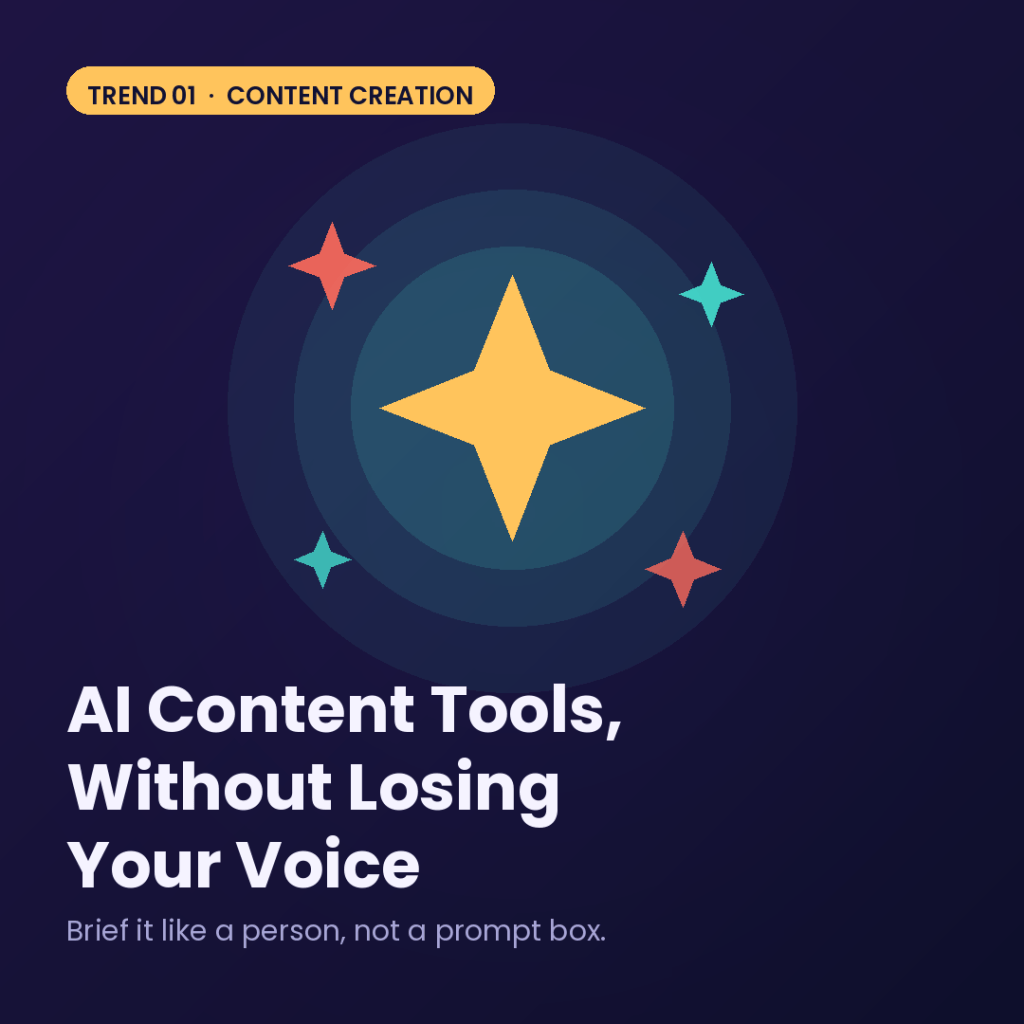
    2. AI Content Creation Tools Are Standard — But Sloppy Prompts Still Show

    Nobody’s debating whether to use AI in the content pipeline anymore as it’s simply part of the process. The bigger question is how to brief these tools properly. The video’s biggest practical nugget was this: treat your AI assistant like a specific, well-informed collaborator, not a vague vending machine.

    That means giving it real criteria, tone of voice, audience demographics, the specific outcome you want, examples of past posts that worked. Vague prompts return vague, generic output that reads like everyone else’s AI-generated caption.

    AI content creation tools that let you lock in brand voice and formatting rules, briefed with real specifics, produce results that still sound like you.

    A few things worth testing this quarter:

    • Feed your AI tool three of your best-performing captions before asking for new ones, so it has a real reference point.
    • Ask for multiple tonal variations of the same post, then pick the one that sounds most human.
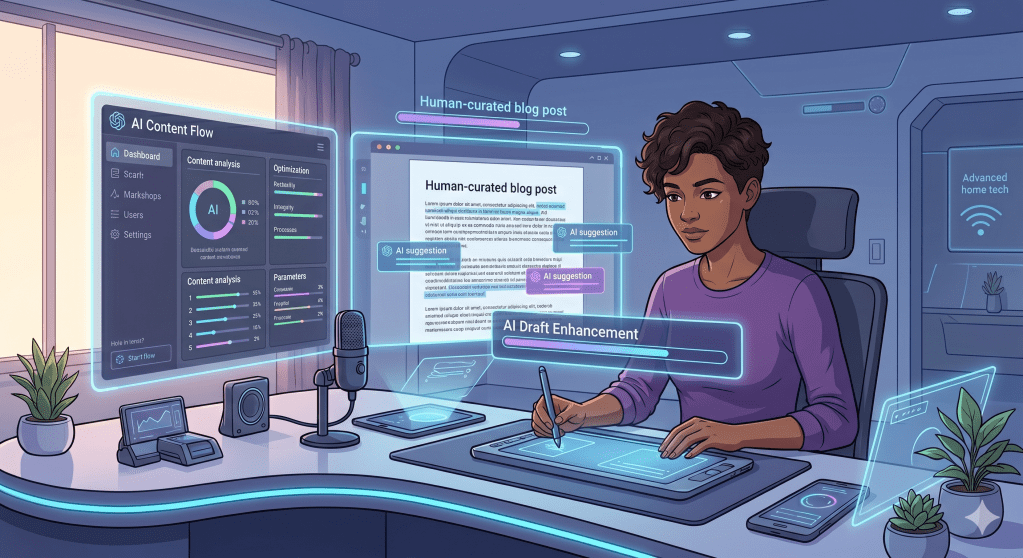
    • Use AI for the first draft and speed, but keep a human doing the final edit — audiences can tell the difference, and they reward it.

    3. Subscription and Gated Content Models Are Growing

    Another notable shift is with more creators and brands are experimenting with subscription-driven content, where a portion of the value — deeper tutorials, early access, unfiltered behind-the-scenes footage — sits behind a paywall or membership tier.

    This isn’t about abandoning free content; it’s about layering it. Free posts build the audience, gated content rewards the most engaged segment and creates a steadier revenue stream that doesn’t rise and fall with algorithm mood swings.

    If you’re weighing a subscription based content model, start small. One exclusive monthly drop, a private community thread, or early access to a resource your best customers already ask for.
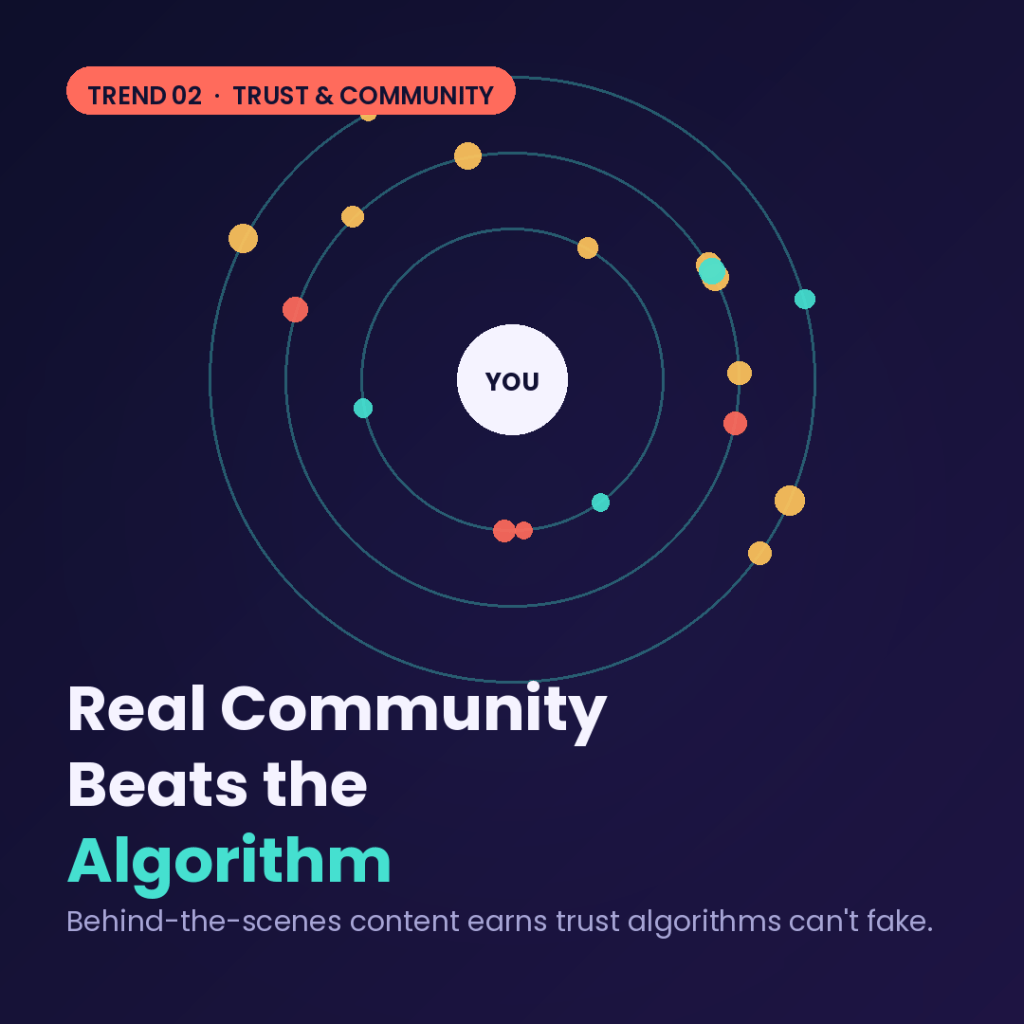
    4. Behind-the-Scenes and Community-First Storytelling Wins Trust

    This might be the most important trend of the bunch. As polished, ad-like content becomes easier to mass-produce with AI, the content that actually stands out is the unpolished kind, a real process, a real mistake, a real person explaining a decision.

    Sharing stories from your own community, not just your own brand voice, was called out specifically as a way to build a behind-the-scenes content strategy that people genuinely stick around for.

    Practically, this looks like:

    • Documenting your actual process instead of only showing the finished product.
    • Featuring real customers or community members instead of stock-style testimonials.
    • Being upfront when something didn’t work, rather than curating only the wins.

    Audiences are getting sharper at spotting manufactured authenticity, so this only works if it’s true — but when it is, it consistently outperforms glossier content.

    5. Real-Time, Conversation-Led Platforms Are Reshaping Discussion

    Text-first, real-time platforms are becoming a genuine hotbed for trending conversation — which is a double-edged sword. On one hand, jumping into real-time trending topics on Threads-style platforms can put a brand directly inside a live conversation, which is powerful for visibility and relevance.

    On the other, that same real-time, unfiltered nature makes these spaces prone to polarization and fast-moving controversy.

    The advice here is balance: show up, participate genuinely, and have an actual point of view, but know when a trending topic isn’t worth the brand risk of wading in.

    6. Strategic Partnerships Are Replacing One-Off Collaborations

    Finally, the video pointed to a move away from single, transactional influencer posts and toward longer, more integrated partnerships — creators and brands building something together over months, not one sponsored post at a time.

    This approach compounds trust instead of resetting it with every new face and it tends to read as far more credible to an audience that’s grown wary of obvious one-off ads.

    Putting It Together: A Quick Action Checklist

    Using AI thoughtfully, building trust through real stories, and rethinking how you approach algorithms all point to the same underlying idea: audiences in 2026 reward brands that feel specific, honest, and consistently present — not just algorithmically lucky. A few starting moves:

    • Audit your last 10 posts — are you optimizing for the feed or for the person reading?
    • Rewrite one AI-assisted post this week using detailed, brand-specific prompts instead of generic ones.
    • Plan one behind-the-scenes piece of content that shows your actual process.
    • Test a small gated or exclusive offer for your most loyal followers.
    • Pick one real-time platform and commit to showing up consistently, not just opportunistically.

    None of this requires a bigger budget — just a sharper, more intentional approach. The brands that treat these shifts as a genuine strategy reset, rather than a checklist to skim past, are the ones that will still be growing steadily by the time next year’s trends roll around.

    Got a trend you think we missed? Drop it in the comments — TechLatestInsights covers the tools and strategy shifts that actually move the needle.


    Leave a Reply

    Your email address will not be published. Required fields are marked *

    Rating: 5 out of 5.

  • AI Agents in 2026: The Next Big Revolution Every Business Should Prepare For

    AI Agents in 2026: The Next Big Revolution Every Business Should Prepare For

    Artificial Intelligence has evolved far beyond chat bots and content generation. In 2026, businesses are entering the era of AI Agents like some intelligent digital assistants capable of planning tasks, making decisions, collaborating with software and executing complex workflows with minimal human intervention.

    Woman interacting with AI hologram showing data visualizations

    From startups to Fortune 500 companies, AI agents are becoming the backbone of customer service, marketing, software development, finance, healthcare and operations.

    If your business isn’t exploring AI agents yet, you’re already behind the curve!

    What Are AI Agents?

    AI agents are autonomous software systems that understand goals, analyze information, make decisions and perform actions without constant human guidance.

    Unlike traditional automation, AI agents can:

    * Understand natural language

    * Learn from previous interactions

    * Break complex tasks into smaller steps

    * Use multiple tools

    * Adapt to changing situations

    * Work continuously 24/7

    Think of them as digital employees rather than simple software.

    Why AI Agents Matter in 2026

    * Increase productivity

    * Reduce operational costs

    * Deliver better customer experiences

    * Make faster decisions

    * Scale without hiring massive teams

    AI agents help solve all five challenges simultaneously.

    Instead of automating one task, they automate entire business processes.

    Real-World Applications

    Customer Support

    AI agents answer customer queries instantly, resolve common issues and escalate only complex cases.

    Marketing

    They generate content ideas, optimize SEO, analyze campaign performance, schedule posts and recommend improvements.

    Sales

    Sales teams use AI agents for lead qualification, CRM updates, email personalization and follow-up automation.

    Software Development

    Developers rely on AI agents to review code, generate documentation, detect bugs and assist with testing.

    Health Care

    Hospitals use AI-powered assistants for appointment scheduling, patient communication and administrative workflows.

    Benefits for Businesses

    Increased Productivity

    Employees spend less time on repetitive tasks and more time solving meaningful problems.

    Lower Costs

    Automation reduces manual effort and improves operational efficiency.

    Faster Decision-Making

    AI agents analyze data in seconds and provide actionable insights.

    Better Customer Experience

    Customers receive instant responses around the clock.

    Improved Accuracy

    Automation reduces human errors in repetitive workflows.

    Challenges to Consider

    While AI agents are powerful, organizations should address:

    * Data privacy

    * Security

    * Human oversight

    * AI bias

    * Regulatory compliance

    Responsible AI governance remains essential.

    How Small Businesses Can Get Started

    The best part is they do not need a huge budget.

    Start with:

    * AI-powered customer support

    * Email automation

    * Marketing assistants

    * Content planning

    * Workflow automation

    * Internal knowledge assistants

    Expand gradually as your team becomes comfortable with AI.

    The Future of Work

    AI agents won’t replace human creativity, leadership, or strategic thinking.

    Instead, they’ll eliminate repetitive work, allowing professionals to focus on innovation, relationships, and problem-solving.

    The businesses that combine human expertise with AI capabilities will gain a lasting competitive advantage.

    Conclusion

    AI agents represent one of the biggest technological shifts since cloud computing and smartphones.

    Organizations that invest today will enjoy greater efficiency, improved customer experiences, and stronger long-term growth.

    Future isn’t about humans versus AI, it’s about humans working smarter with AI.

  • Enhancing SEO with AI-Driven Strategies

    Enhancing SEO with AI-Driven Strategies

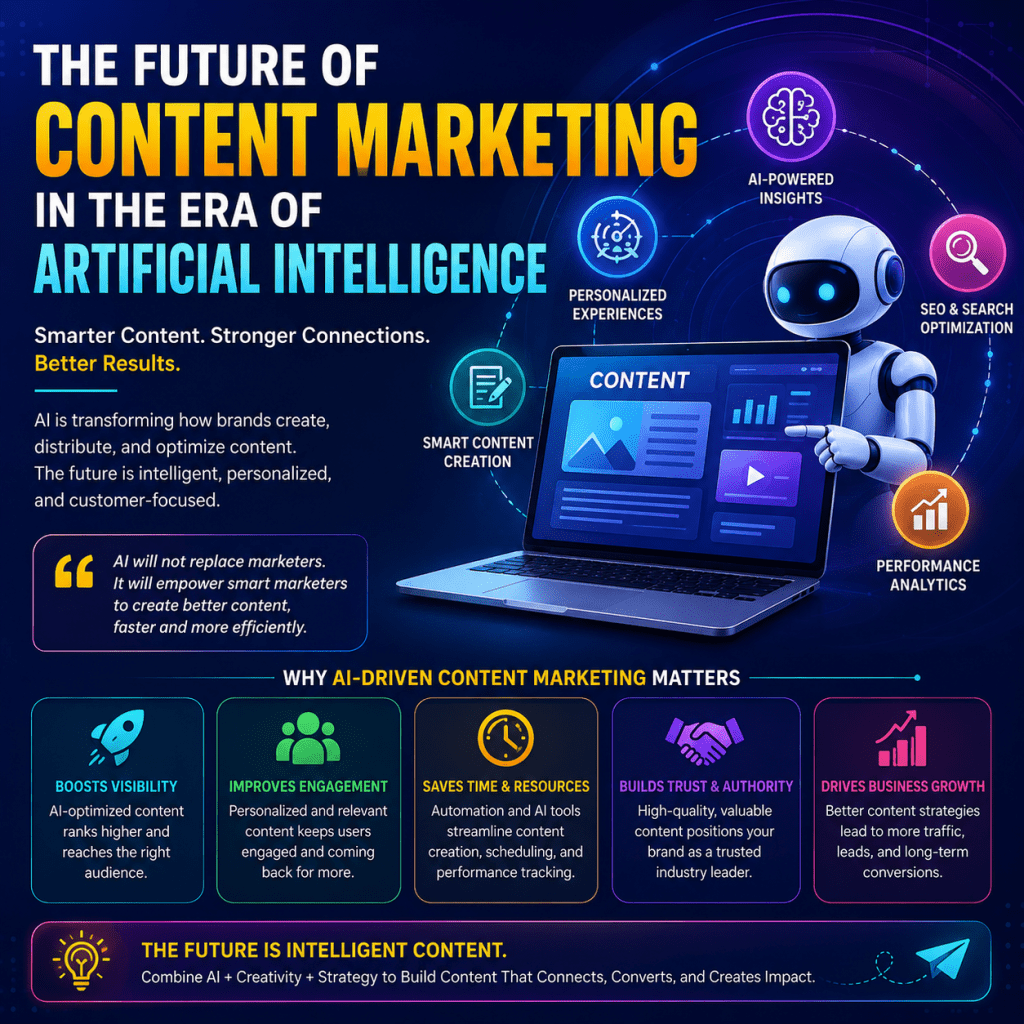
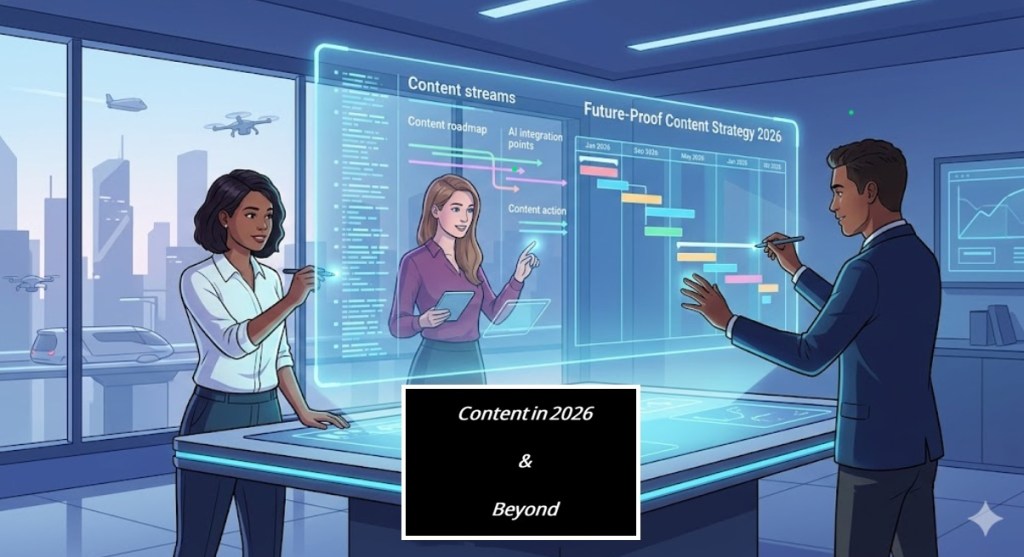
    Today, content marketing is no longer limited to blog writing or social media posting because AI tools are reshaping the entire digital ecosystem. Artificial Intelligence is transforming the way brands create, publish, and distribute online content.

    Modern businesses now use AI-driven platforms to improve customer targeting, automate campaigns, and analyze audience behavior in real time. This evolution is making digital marketing faster, smarter, and more personalized than ever before.

    The combination of AI, marketing and content strategies is helping brands deliver highly relevant experiences to users. Personalized recommendations, predictive analytics, and automated content optimization are now becoming standard practices in the online business world.

    “Artificial Intelligence will not replace marketers. It will empower smart marketers to work more efficiently.”

    One of the biggest advantages of AI-powered marketing digital marketing techniques is data analysis. AI systems can process massive amounts of customer data within seconds and identify patterns that humans may miss. This allows businesses to create content that directly matches user interests and search intent.

    AI also plays a major role in SEO optimization. Search engines now prioritize useful, high-quality, and user-focused content. Businesses using AI-assisted content marketing strategies can optimize keywords, improve readability, and increase website discoverability more effectively.

    Another important change is content personalization. Users expect brands to understand their preferences and deliver tailored experiences. AI helps businesses create customized email campaigns, personalized product suggestions, and targeted blog recommendations that improve engagement rates.

    The impact of digital marketing in 2026 will heavily depend on automation and intelligent systems. Chatbots, AI-powered customer support, voice search optimization, and automated social media scheduling are already changing how companies communicate online.

    Despite technological advancements, human creativity still remains essential. AI can generate ideas, analyze trends, and improve efficiency, but authentic storytelling and emotional connection continue to be driven by human insight. Successful marketing and content strategies will always require originality and trust.

    Short-form content is also becoming more important in the AI era. Mobile users prefer fast-loading articles, concise paragraphs, and visually engaging content. Businesses focusing on reader-friendly formatting often achieve better retention and lower bounce rates.

    Another major trend shaping digital marketing is voice search and conversational SEO. More users now search online using natural language through voice assistants. This means brands must create content that answers real questions clearly and naturally.

    AI-powered tools are also improving content performance tracking. Businesses can now monitor user engagement, click-through rates, and audience behavior instantly. These insights help marketers refine digital content marketing strategies for better long-term results.

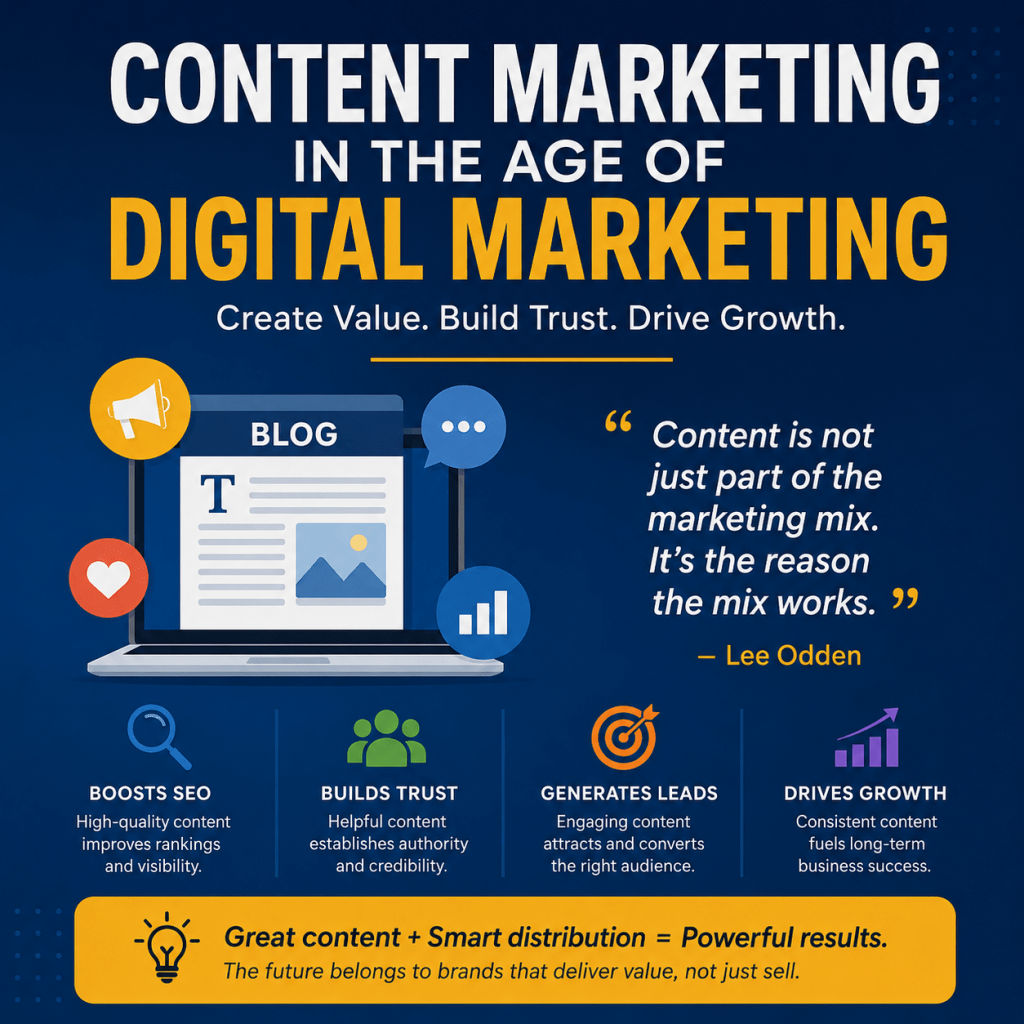
    The future of content marketing will belong to brands that successfully combine Artificial Intelligence with human creativity. Companies that create valuable, authentic, and SEO-optimized content will continue to dominate search rankings and audience trust.

    As technology evolves, businesses investing in digital content marketing solutions and AI-driven content strategies will gain a strong competitive advantage in the rapidly growing digital economy.

    Leave a Reply

    Your email address will not be published. Required fields are marked *

  • How to Build a Future-Proof AI Content Strategy for Small Technology Blogs in 2026

    How to build a future-proof AI content strategy for small technology blogs in 2026 isn’t just a trending query. It’s a more of a survival question now for all those publishers seeking to navigate through the rapid algorithm shifts, stricter content quality standards and rising online reader expectations.

    On a more personal level I have seen in the last few years, by working with multiple niche tech blogs—some growing, others quietly losing out on traffic. Where was the difference?

    It wasn’t volume. Rather it was intent, credibility and usefulness. Thus, here in this guide I seek to draw your attention on what’s actually working in 2026, based on my hands-on testing, content audits and real organic traffic recoveries.

    Why Most AI Content Strategies Fail in 2026

    Let’s address the obvious notion with AI tools and the reasons behind the failure. Here’s what I consistently find in failing content strategies:

    • Generic posts that outrightly mirror competitors
    • No firsthand experience or sharing of original insight
    • Weak topical authority or content pillars
    • Over-optimized keywords without adding any kind of reader value
    • Lack of editorial voice or human perspective to the published content piece

    It is smart to be vary of the changes happening in the space. Google’s Helpful Content system has matured. It no more simply detects low-quality content as now it deprioritizes it at scale.

    Key takeaway: AI is not the problem. Unsupervised, unoriginal usage is.

    What a Future-Proof Strategy Actually Looks Like

    From analyzing over 50 tech blog case studies in 2025–2026, the sites that gained traffic shared five traits:

    1. Human-Led, AI-Assisted Workflow

    Instead of generating full articles with AI, high-performing teams:

    • Use AI for outlines, research synthesis, and ideation
    • Inject personal testing, screenshots, and real examples
    • Add editorial review before publishing

    Example: One SaaS-focused blog increased organic traffic by 78% after replacing AI-written intros with founder-written insights based on product usage.

    2. Experience-Driven Content (E-E-A-T in Action)

    Google’s emphasis on Experience is now measurable.

    Content that performs well includes:

    • Real-world use cases
    • Performance benchmarks
    • Comparisons based on actual testing
    • Screenshots, workflows, or data logs

    Personal insight: When I audited a cybersecurity blog, posts that included step-by-step firewall configuration screenshots ranked significantly higher than theory-based guides—even with fewer backlinks.

    3. Long-Tail Keyword Depth, Not Breadth

    Instead of targeting broad terms like “AI tools,” successful blogs go deeper:

    • The best AI tools for SaaS onboarding automation 2026
    • How to integrate AI chatbots with CRM for small startups
    • AI content optimization strategies for low-authority domains

    These queries convert better and face less competition.

    Data point: In one niche blog, long-tail keywords drove 62% of total traffic while representing only 28% of published content.

    4. Topical Authority Clusters

    Single posts don’t rank anymore—topics do.

    A strong structure looks like this:

    • Pillar: AI content strategy
    • Supporting:
    • AI content workflows
    • AI SEO optimization
    • AI content auditing
    • AI vs human writing analysis

    Internal linking between these creates semantic authority.

    5. Editorial Voice and Trust Signals

    Readers and search engine algorithms are always looking for signals of credibility:

    • Clear author bylines
    • Editorial review notes
    • Citations to credible sources
    • Transparent opinions

    What I’ve seen firsthand:
    Adding author bios with verifiable experience increased average session duration by ~18% on a mid-tier tech blog.

    Practical Framework You Can Apply Today

    Here’s a simplified workflow I recommend to clients:

    Step 1: Keyword Mapping

    Choose 1 primary long-tail keyword per article
    Add 3–5 supporting variations naturally

    Step 2: Content Blueprint

    Before writing, define:

    • Who is this for?
    • What problem does it solve?
    • What unique angle can you provide?

    Step 3: AI-Assisted Drafting

    Use AI for:

    • Structuring headings
    • Summarizing research
    • Generating alternative angles

    Step 4: Human Enrichment

    Add:

    • Personal experience
    • Real examples
    • Data or experiments
    • Strong opinions where relevant

    Step 5: Editorial Review

    Check for:

    • Accuracy
    • Clarity
    • Originality
    • Tone consistency

    Common Mistakes to Avoid in 2026

    Even experienced bloggers fall into these traps:

    • Publishing too frequently without quality control
    • Recycling competitor content structures
    • Ignoring user intent behind keywords
    • Overusing AI-generated phring without editing
    • Lack of updates on older content

    Reality check:
    Updating existing posts with fresh insights often delivers better ROI than publishing new ones.

    Final Thoughts

    The blogs winning in 2026 aren’t the ones producing the most content—they’re the ones producing the most useful content.

    If you focus on real experience, thoughtful structure, and human insight, AI becomes a powerful assistant—not a liability.

    And if you’re serious about long-term growth, remember this: how to build a future-proof AI content strategy for small tech blogs in 2026 isn’t about tools—it’s about trust, depth, and consistency.

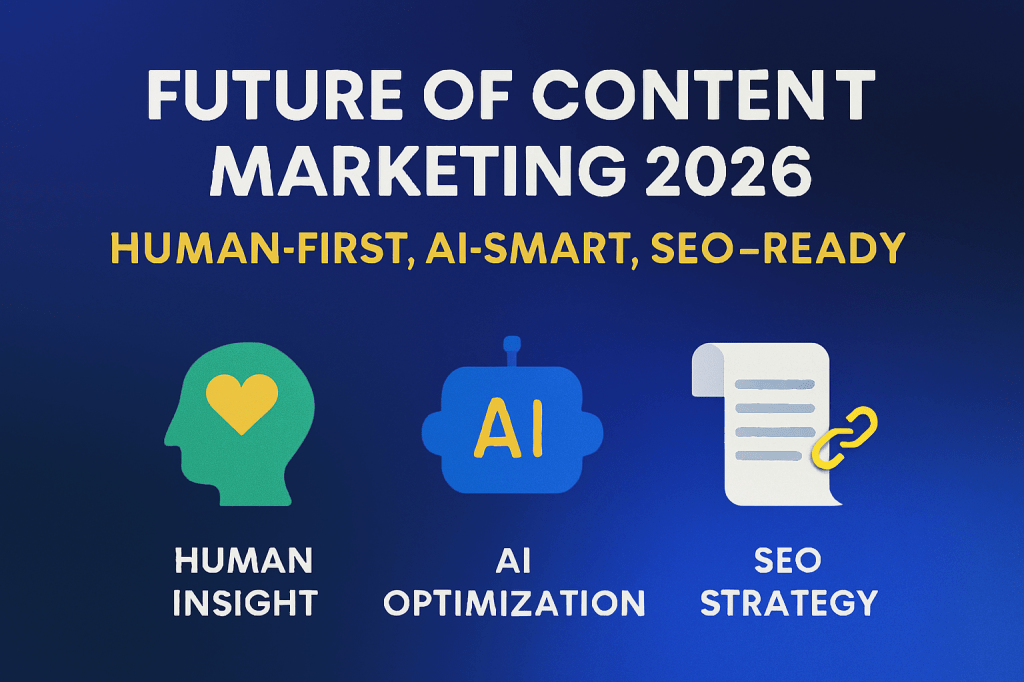
  • The Future of Content Marketing in 2026: Human-First, AI-Smart and SEO-Ready 🚀

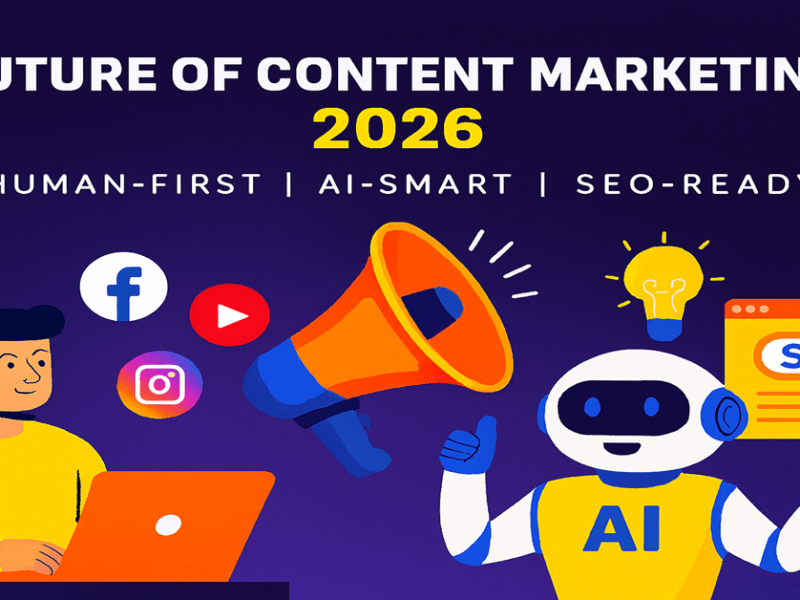
    The Future of Content Marketing in 2026: Human-First, AI-Smart and SEO-Ready 🚀

    future of content marekting in 2026

    In 2026, authenticity, AI augmentation, and audience alimentation are going to be the new content pillars. These are for achieving success. This will be across the board from startups, digital agencies or technology content firms. Thus, understanding these shifts is crucial to staying relevant and ranking high.

    Let’s now take a deep dive into the top trends, tools, and tactics shaping the content marketing landscape in 2026. How can you apply them to your brand? Let’s check out.

    1. Predictive SEO is the New Standard 🧠

    Gone are the days of reactive keyword research. In this age, predictive AI content tools for SEO are helping marketers anticipate search trends before they peak.

    Say, for instance, the platforms like Clearscope, MarketMuse and India-specific tools like Scalenut are using machine learning to forecast what your target audience will search next.

    2. Conversational AI Writing Tools Are Mainstream 🤖

    AI writing assistants like Jasper, Writesonic and ChatGPT are now integrated into editorial workflows. But in 2026, it’s not just about speed; it’s about tone, empathy and cultural nuance.

    Indian startups are increasingly using conversational AI writing tools for blogs to create relatable, regionalized content that resonates.

    3. AI-Powered Content Recommendation Engines Drive Engagement 📈

    Personalization is no longer optional. With tools like Recombee and Adobe Sensei, brands are deploying AI-powered content recommendation engines to serve the right blog, video, or product at the right time. This boosts session time, reduces bounce rate, and increases conversions.

    4. Human-Centric Storytelling Beats Algorithmic Content 🧩

    Despite the AI boom, human-first storytelling is what builds trust. In 2026, brands that blend data with emotion—especially in B2B and tech—are seeing higher engagement. Think founder stories, behind-the-scenes content, and customer journeys.

    Pro Tip: Use emotional storytelling in digital marketing campaigns to connect deeply with your audience.

    5. AI Predictive Keyword Research Platforms in India 🔍

    Tools like LongShot AI and Frase are helping Indian content teams identify AI predictive keyword research platforms that are hyper-localized. These tools analyze regional search behavior, language preferences, and seasonal spikes.

    6. AI Analytics Tools for Content Optimization 📊

    In 2026, content performance will be measured in real time. AI analytics tools for content optimization in India like Narrato and WriterZen are helping marketers tweak headlines, CTAs and structure based on live engagement metrics.

    7. AI Chatbots for Website Engagement in India 💬

    Chatbots are no longer just for customer service. In 2026, AI chatbots for website engagement in India are being used to recommend blogs, collect feedback, and even co-create content with users.

    8. AI Content Curation Tools for Indian Digital Marketers 🧰

    Curation is as important as creation. Tools like Curata and UpContent are helping Indian marketers use AI content curation tools to build newsletters, social posts and blog roundups that drive traffic and backlinks.

    9. AI Content Marketing Strategies for Indian Startups 🧪

    The observation is that across industries, from business type to type of business this new trend has been adopted. From SaaS to D2C, Indian startups are embracing AI content marketing strategies that combine automation with authenticity. This includes AI-assisted video scripting, multilingual blog generation, and influencer content matching.

    10. Best AI Tools for Content Creators in India 🧠

    Finally, a roundup of the best AI tools for content creators in India includes Notion AI, GrammarlyGO, Writesonic and Scalenut. These tools are empowering creators to scale without sacrificing quality.

  • The Future Is Now: Key Technology Developments Shaping 2025 and Beyond🚀

    The Future Is Now: Key Technology Developments Shaping 2025 and Beyond🚀

    1. Agentic AI: Beyond Automation 🌐

    Artificial intelligence is evolving from reactive systems to AI tools that can proactively make decisions, learn independently, and collaborate with humans. This shift is revolutionizing:

    • Customer service through intelligent chatbots and virtual assistants
    • Healthcare diagnostics with predictive modeling
    • Financial planning via autonomous portfolio management

    For entrepreneurs, this opens up best ideas for businesses in AI-driven consulting, personalized wellness platforms and smart retail.

    2. Advanced Connectivity & 6G Foundations 📶

    While 5G is still rolling out globally, 6G research is already underway. Expect:

    • Ultra-low latency for real-time applications like remote surgery and autonomous vehicles
    • Massive IoT integration for smart cities and homes
    • Edge computing to reduce cloud dependency and enhance data privacy

    These developments are fertile ground for ideas for small businesses in smart home installation, IoT device servicing, and localized data analytics.

    3. Immersive Reality: AR, VR & Mixed Reality 🧠

    Immersive technologies are no longer niche; they’re mainstream. In 2025:

    • AR overlays will enhance retail, education, and tourism
    • VR training modules will redefine employee onboarding and skill development
    • Mixed reality will power collaborative design and remote workspaces

    This creates business ideas in virtual storefronts, immersive learning platforms, and MR-based architectural visualization.

    4. Digital Trust & Cybersecurity Innovation🔐

    With data breaches and AI-generated misinformation on the rise, digital trust is paramount. Emerging solutions include:

    • Decentralized identity systems
    • Zero-trust architectures
    • AI-powered threat detection

    Cybersecurity startups and franchise business models focused on digital hygiene, compliance, and secure infrastructure will thrive.

    5. Quantum Technologies: The Next Frontier ⚛️

    Quantum computing is moving from labs to limited commercial use. In 2025, expect:

    • Quantum simulations for drug discovery and climate modeling
    • Quantum encryption for ultra-secure communication
    • Quantum AI for solving complex optimization problems

    These breakthroughs offer new ideas for business in quantum-as-a-service platforms, secure data vaults, and quantum education hubs.

    6. Robotics & Automation in Everyday Life 🤖

    Robots are no longer confined to factories. In 2025:

    • Service robots will assist in hospitality, elder care, and logistics
    • Collaborative robots (cobots) will work alongside humans in SMEs
    • AI-driven drones will handle deliveries, surveillance, and agriculture

    This opens good ideas for business in robot leasing, drone fleet management, and automation consulting.

    7. Bioengineering & Personalized Health🧬

    The convergence of tech and biology is reshaping healthcare:

    • CRISPR advancements for gene editing
    • Wearable biosensors for real-time health tracking
    • AI-driven diagnostics for personalized treatment plans

    Entrepreneurs can explore business ideas in health-tech wearables, genetic counseling services, and AI-powered wellness apps.

    8. Space Tech & Satellite Ecosystems🌌

    Space is becoming a commercial playground:

    • Low Earth Orbit (LEO) satellites for global internet coverage
    • Space tourism and asteroid mining research
    • Satellite-based climate monitoring

    This inspires new ideas for business in satellite data analytics, space education, and eco-monitoring platforms.

    9. Sustainable Tech & Circular Innovation🧩

    Sustainability is no longer optional. In 2025:

    • Green cloud computing and energy-efficient data centers
    • Circular economy platforms for reuse and recycling
    • Carbon capture technologies integrated with AI

    These trends support best ideas for business in eco-packaging, green logistics, and sustainability consulting.

    10. AI-Augmented Decision Making for Entrepreneurs 📊

    AI is becoming a strategic partner for business owners:

    • Predictive analytics for market trends
    • AI-generated business plans and financial models
    • Automated customer segmentation for targeted marketing

    This empowers franchise business owners and startups to scale faster, smarter, and more efficiently.

    🔚 Summation: Tech as a Launchpad for Business Innovation

    From agentic AI to quantum computing, the technologies shaping 2025 are not just futuristic—they’re actionable. They offer a rich playground for business ideas, whether you’re launching a franchise business, exploring ideas for small business, or seeking the best ideas for business in emerging sectors.

    Ready to turn these trends into your next venture?

    Explore more insights at TechLatestInsights.com and subscribe for weekly updates on good ideas for business, tech-driven entrepreneurship, and strategic innovation.

    Let’s build the future one idea at a time.

    Rating: 5 out of 5.

    Leave a Reply

    Your email address will not be published. Required fields are marked *

  • How to Build a Data-Driven Campaign Strategy for Telecom and HR Marketing in 2026

    How to Build a Data-Driven Campaign Strategy for Telecom and HR Marketing in 2026

    Here in this blog, I seek to explore ways to build scalable, insight-led campaigns that drive customer engagement and employee alignment and achieve business growth. We’ll take a deep dive into some tools, frameworks, and also real-world examples to help us optimize our strategy for high-intent audiences.

    Why Data-Driven Campaigns Matter in Telecom and HR

    The convergence of telecom marketing and HR communications is reshaping how organizations engage with both customers and employees. In 2026, the most successful brands will be those that:

    • Use predictive analytics for campaign targeting
    • Automate customer communication workflows
    • Align internal messaging with external brand narratives
    • Track KPI benchmarks across regions and teams

    Step 1: Define Campaign Objectives and Audience Segments

    Start by identifying your primary campaign goals—whether it’s increasing prepaid revenue, improving employee retention, or launching a new product. Then, segment your audience based on:

    • Behavioral data (usage patterns, engagement history)

    • Demographic data (location, job role, age)

    • Psychographic data (values, motivations, pain points)

    Use tools like Google Analytics, LinkedIn Campaign Manager, and CRM dashboards to refine your segmentation.

    Step 2: Build a Campaign Calendar and Messaging Framework

    Consistency is key. Develop a campaign calendar that outlines:

    • Frequency of communication

    • Channel mix (email, SMS, social media, intranet)

    • Messaging themes and tone

    For HR campaigns, align with organizational milestones—appraisals, onboarding, and DEI initiatives. For telecom, sync with product launches, data pack promotions, and seasonal offers.

    Step 3: Automate and Personalize Communication

    Use marketing automation platforms like HubSpot, Zoho Campaigns, or Salesforce Marketing Cloud to:

    • Trigger personalized messages based on user behavior

    • Manage scripts and templates for one-to-one outreach

    • Track open rates, CTRs, and conversion metrics

    In HR, automation helps streamline employee onboarding, pulse surveys, and learning & development campaigns.

    Step 4: Analyze Campaign Performance and Benchmark KPIs

    Set up dashboards to monitor:

    • Campaign efficacy (reach, engagement, conversion)
    • Governance of pilots and broad-basing
    • Replication of best practices across circles or departments

    Use A/B testing, heatmaps, and sentiment analysis to refine your approach. Benchmark against industry standards and internal historical data.

    Step 5: Optimize for SEO and Discoverability

    Every campaign should feed into your content marketing ecosystem. Optimize blog posts, landing pages, and social media content with:

    • High-intent keywords

    • Meta descriptions and alt tags

    • Internal linking to pillar pages

    For example, a telecom campaign promoting a new data pack can link to a blog titled “Best prepaid data plans for remote workers in India”. An HR campaign about DEI can link to “How to build inclusive onboarding workflows in 2026”.

    Real-World Example: Vodafone Idea’s Prepaid Campaign Strategy

    Vodafone Idea’s approach to prepaid campaign execution offers a blueprint for success:

    • Error-free campaign deployment across circles
    • Governance of pilots with data-backed decisions
    • Automated reporting for efficiency and accuracy
    • Ownership of customer communication scripts and calendars

    This model can be adapted for HR teams managing employee lifecycle campaigns, ensuring consistency and impact.

    Conclusion: Scale with Strategy and Empathy

    Whether you’re in telecom or HR, the future of campaign success lies in data, automation, and emotional resonance. Build systems that are:

    • Scalable across geographies and teams
    • Responsive to real-time feedback
    • Rooted in authentic storytelling and brand values

    Click below to check out more in my Video Editing Skills.

    Rating: 5 out of 5.
  • How Global Policies Shape Innovation—Tech Tariffs & Trade

    How Global Policies Shape Innovation—Tech Tariffs & Trade

    🌐 The New Wave of Tech Tariffs

    In a bold move that’s reshaping the global technology landscape, the United States recently imposed steep tariffs on imports from 14 countries, citing national security and economic competitiveness. These trade restrictions target critical sectors, including semiconductors, AI hardware, and digital infrastructure components.

    Interestingly, India was exempted from this sweeping policy—a strategic decision that positions it as a potential tech hub in the evolving global order.

    🔄 Ripple Effects on Global Supply Chains

    The new tariff regime is already causing disruptions across Asian tech ecosystems:

    – Japan and South Korea, key players in chip manufacturing, face increased costs and rerouted supply chains. 

    – Indonesia and Vietnam, rising stars in hardware assembly, are reassessing their export strategies. 

    – European tech firms are bracing for delays in component sourcing and cross-border innovation projects.

    These shifts are not just economic—they’re deeply strategic, influencing how technology companies plan, invest, and scale.

    With its exemption status, India is uniquely positioned to:

    – Attract foreign investment in semiconductor fabrication, AI development, and cloud infrastructure. 

    – Strengthen its Make in India initiative and expand digital exports. 

    – Serve as a neutral ground for global tech collaborations amid rising geopolitical tensions.

    Government-backed programs like Digital India, PLI schemes, and Startup India are already aligning with this momentum, making India a preferred destination for tech innovation.

    🧭 What Businesses Should Watch

    For startups, SMEs, and multinational tech firms, here are key takeaways:

    – Monitor tariff updates and trade agreements via platforms like WTO Tracker and TechPolicy Digest. 

    – Diversify supplier networks to mitigate risks from policy shifts. 

    – Explore India-based partnerships for R&D, manufacturing, and market expansion. 

    – Invest in regulatory intelligence tools to stay ahead of compliance and opportunity.

    📬 Final Thought

    As both technology and trade become increasingly intertwined, understanding the policy landscape is no longer optional; rather, it’s a strategic imperative. India’s emerging role offers both opportunity and responsibility in shaping the next wave of global innovation.

    Leave a Reply

    Your email address will not be published. Required fields are marked *

    Read more: How Global Policies Shape Innovation—Tech Tariffs & Trade

    Rating: 5 out of 5.

  • Content Tricks For Success In AI World In 2026 📘

    Content Tricks For Success In AI World In 2026 📘

    Whether you run a SaaS platform, an e-commerce store, or an educational portal, mastering content in this AI driven era may set you apart from your competitors.

    1. Why Is AI Changing Content Faster Than Ever?🎯

    Artificial intelligence is revolutionizing:

    1. Content personalization
    • Predictive SEO
    • Conversational interfaces

    Now we have predictive AI content tools for SEO, and these AI systems now predict user intent before the user types a single query. Thus, it is a key to have your content align with these predictive models to simply get discovered.

    2. How To Create Content That Feels Human?💡

    A. Use Conversational AI Writing:

    Instead of robotic text, blend conversational AI writing tools for blogs to generate drafts that feel natural.

    B. Build Trust:

    Answer real user questions transparently.

    C. Optimise For Voice Search:

    In India, voice search queries are growing by 30% YOY. Incorporate phrases like ‘best AI tools for content creators in India‘.

    3. Five Content Tricks To Boost Time On Page📝

    Here are proven methods to keep your readers engaged longer:

    ✅ Create Interactive Content

    Embed polls, quizzes, or mini-calculators.

    ✅ Use AI Video Summaries

    Create and use the new ‘Fad’ in short videos that explain the core message of your article.

    ✅ Cluster Related Posts

    Envision the power of Content Clusters. Use AI powered content recommendation engines to auto-suggest related blogs.

    ✅ Add Scroll Triggers

    Another actionable suggestion is to use the “read next” prompt after every 300 words.

    ✅ Update Frequently

    Refresh statistics used in posts and case studies every 3-4 months.

    4. Is Predictive SEO The Future? 📈

    In a word? Yes.

    The AI-driven tools can forecast what users will search for next quarter.

    Next steps to leverage predictive SEO:

    1. Use AI predictive keyword research platforms in India to spot emerging trends.
    2. Build content pillars around those keywords before the competition.
    3. Cross-link your old content to new predictive topics.

    5. Should You Use AI For Content Curation? 🤔

    Absolutely yes! As we have already witnessed, now AI helps in a big way to curate faster and more accurately.

    Tips:

    🔹 Use AI content curation tools for Indian digital marketers to gather insights from thousands of sources.

    🔹 Then, personalize the curation to fit your audience’s tastes.

    6. Three Metrics That Define Success In AI Content📊

    1st: User Engagement Time

    2nd: Scroll Depth

    3rd: Content Relevance Score

    You can track these using AI analytics tools for content optimization in India, which auto-analyze reader behavior.

    7. The Role Of AI Chatbots🚀

    Smart AI chatbots for website engagement in India can:

    [a] Answer questions instantly

    [b] Collect emails

    [c] Guide visitors to the right content

    [d] Adding chatbots can lift engagement by up to 40%.

    8. Creating Evergreen AI Content 💼

    To achieve this, lay your focus on:

    Evergreen AI content strategies for Indian businesses

    ✅ Refreshing your cornerstone pages twice a year

    ✅ Building in-depth guides with FAQs

    ai-powered-content-strategies

    Conclusion🏁

    As we move toward 2026, the companies that master AI content marketing strategies for Indian start-ups will become the leaders in visibility and trust. From predictive SEO to personalized chatbots and advanced analytics, there lies an incredible toolbox ready to use.

    With continuously evolving the strategies and keeping in mind that the future of content is AI-driven, human-centered and experience-focused.

    If you want to thrive in this exciting landscape, start today because in 2026, the winners will be those who embrace AI content marketing strategies for Indian start-ups first.

    Leave a Reply

    Your email address will not be published. Required fields are marked *

    Read more: Content Tricks For Success In AI World In 2026 📘

    Rating: 5 out of 5.

  • Top AI Productivity Tools for Remote Work in 2025 To Work Smarter, Not Harder

    Top AI Productivity Tools for Remote Work in 2025 To Work Smarter, Not Harder

    Ever since I started working back then in 2013 I have been fully immersed in the digital revolution and found that the top AI productivity tools for remote work in 2025 are not just “nice-to-have” additions, they’re the reason I can get more done with less burnout.

    These tools have become my trusted digital companions, saving me time, automating mundane tasks, and helping me prioritize deep work.

    In the past year, many developments have taken shape, resulting in the market being bombarded with dozens of AI apps and platforms. These have laid a strong impact by, by the way, genuinely transforming the way we work. Here in this post, I’m sharing my personal take on the best of the best, tools tailored especially for the professional like you in 2025 and beyond.

    1. Notion AI: This Is A Powerhouse For Knowledge Workers

    The tool, Notion AI for content creation and project planning was one of the first tools I had tried to use in my workflow. Irrespective of the need for drafting key blog outlines, creating knowledge wikis, or simply generating the task specific checklists, this tool, Notion AI will help you to do it with ease. This has its core ability in generating context-relevant text suggestions that has saved many hours each week. Adding to this is its ability to even spark some creative ideas that you might not have thought of yourself.

    2. Grammarly: Your Virtual Communication Assistant

    Clear and polished communication is a must in remote work setups. Grammarly AI for professional writing improvement goes beyond correcting typos—it helps you fine-tune tone, intent, and clarity. Whether I’m composing client emails or publishing blog content, Grammarly makes my words feel like they’ve gone through a professional editor

    3. Otter.ai: Your AI Meeting Memory

    I work with clients across time zones, and AI tools for real-time meeting transcription and summarization like Otter.ai have been lifesavers. This tool transcribes meetings live, tags speakers and even gives you summaries with key points. It frees up my attention to actually participate in conversations rather than worrying about missing details.

    4. Trello + Butler: Automate Your Projects Like a Pro

    If you’re into kanban boards and organized visual planning, then you’ll love AI-powered task automation in Trello for remote teams. Butler, Trello’s AI-based automation tool, lets you automate card moves, trigger reminders, and set priority flags. Project management without Trello feels chaotic now.

    5. Clockwise: Calendar Intelligence That Cares

    AI-based smart calendar assistants for remote professionals are increasingly necessary, and Clockwise tops the list. It automatically blocks out focus time, reschedules meetings for low-impact hours and ensures I get enough breathing room. With it, my weeks feel intentionally structured instead of endlessly reactive.

    6. Motion: AI Meets Timeboxing

    I recently started using Motion, which integrates AI productivity apps that support timeboxing and daily planning. It uses AI to analyze your task list, calendar, and energy levels, then suggests a time-optimized schedule. Honestly, it’s like having a digital chief of staff.

    7. Superhuman: Email on AI Steroids

    Managing your inbox doesn’t have to be a chore. Superhuman email AI tools for workflow optimization help me stay at inbox zero without stress. From auto-sorting emails to preemptive reply suggestions, it’s the fastest email experience I’ve ever used and it saves me at least an hour a day.

    8. Fireflies.ai: Smarter Meeting Notes

    Similar to Otter, Fireflies brings AI meeting assistants for capturing insights and action items into your video calls. I use it for internal team calls and strategy sessions—it tags follow-ups, notes deadlines, and delivers accurate transcriptions almost instantly.

    9. ClickUp AI: All-in-One Productivity Central

    ClickUp has become my go-to for full-scale project management. And since they launched ClickUp’s AI tools for managing projects and remote workflows, I rarely need to jump across different apps. The AI helps suggest tasks, generate documents, and align deadlines seamlessly.

    We all know that remote work can blur the lines between life and work. That’s where AI scheduling tools to improve work-life balance for remote workers like Reclaim come in. It syncs with your work and personal calendars, auto-reschedules meetings based on personal needs, and reminds you to take breaks. It’s not just about productivity—it’s about sustainability.

    If you’re working remotely in 2025 and not tapping into these tools, you’re leaving serious productivity gains on the table. Whether it’s automating workflows, managing emails, optimizing your time, or simply reducing mental load—these tools are making a measurable difference in my daily performance.

    Start small, integrate one or two, and watch how your workflow transforms.

    Leave a Reply

    Your email address will not be published. Required fields are marked *

    Ways To Boost Productivity in 2025 By Transforming Workflows With These Top AI Tools

    We all are living in a world flooded with AI-powered productivity tools today. That’s progressing in a fast-paced digital landscape, staying productive is more challenging than ever. With the rise of remote work and the constant influx of information, professionals are seeking innovative solutions to streamline their tasks. Enter these tools, which are revolutionising the…